I recently learned something beautiful about the Zoroastrian kasti from friends in the community — and it completely changed the way I see this sacred thread.
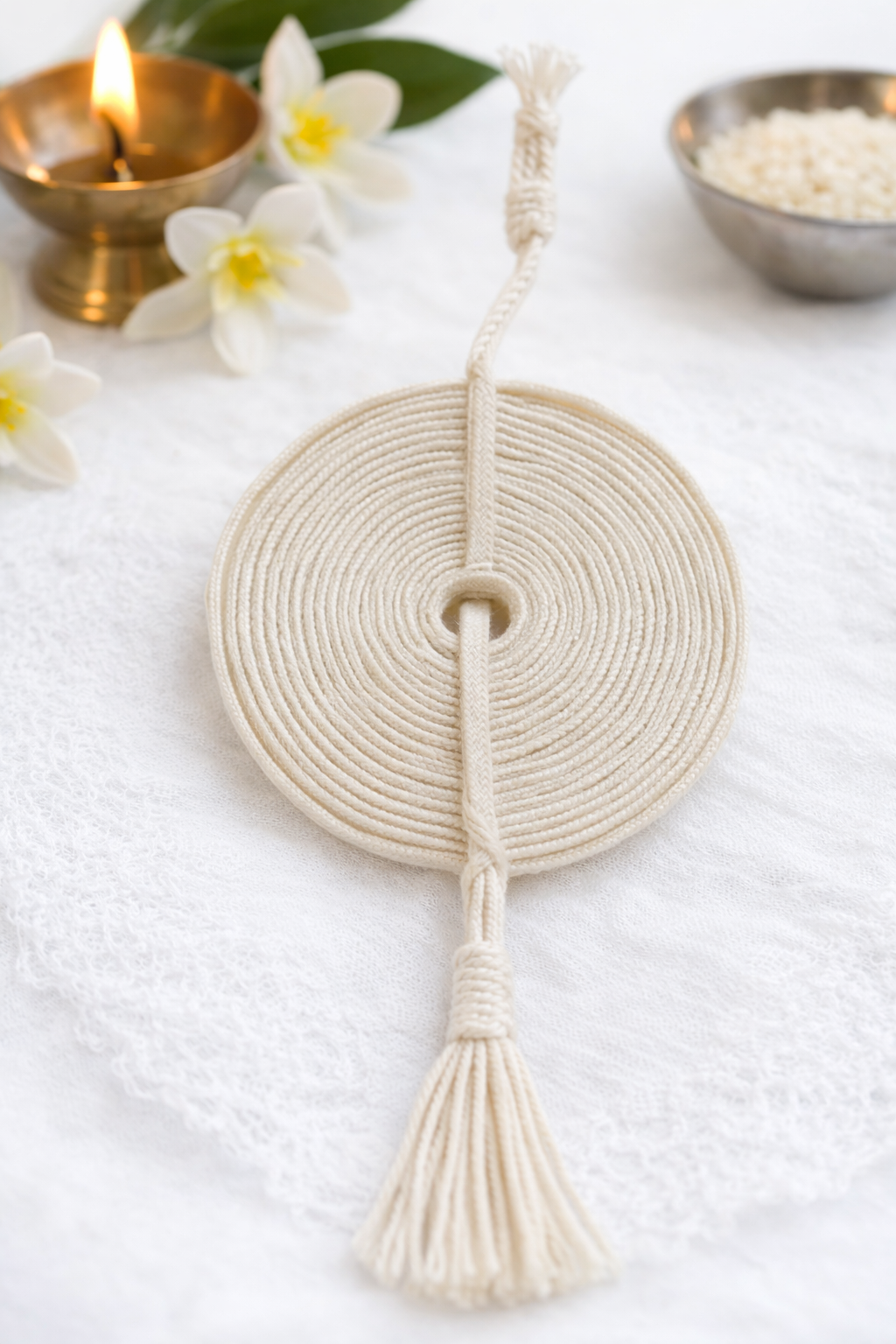
The kasti isn’t just worn; it is deeply symbolic. It is made of 72 fine wool strands, said to represent the 72 chapters of the Yasna prayers. When tied, specific knots are made during the recitation of prayers — a ritual that symbolically “girds” the wearer in spiritual armour each morning, reminding them to protect goodness and creation.

What fascinated me even more is how it’s made.
Traditionally woven from lamb’s wool — often seen as a symbol of purity and innocence — the Kasti is crafted as a narrow, hollow cord. Some explain that this hollow structure symbolises the world and the space within creation, reminding the wearer of their responsibility toward everything that exists.
The Kasti is traditionally made of 72 fine threads, said to represent the 72 chapters of the Yasna. It is wrapped three times around the waist, symbolising good thoughts, good words, and good deeds, and tied with four knots that affirm devotion to Ahura Mazda and the rejection of evil.
The weaving itself is incredibly intricate. Women begin by spinning raw wool into fine yarn using a drop spindle. Two threads are twisted together to strengthen them before weaving begins on a small, foldable wooden loom called a jantar. The loom is uniquely flexible, allowing the warp to be carefully removed mid-weaving and resumed later — something rare in textile traditions.
Traditionally, great care is taken during the process. If a thread snags while the woven cord is turned inside out, it may be set aside. Many see in this a reflection of life’s spiritual journey — growth requires focus, discipline, and intention.
After weaving, the thread is washed and traditionally purified through sulphur fumigation before being consecrated.
In earlier generations, many young Parsi girls were taught this craft. Today, it has become a specialised skill practiced mostly by elderly women, quietly preserving a tradition that carries centuries of faith, symbolism, and devotion.
The next time I see someone tying their Kasti, I’ll remember — it’s not just a ritual. It’s history, prayer, craftsmanship, and identity woven into one sacred thread.